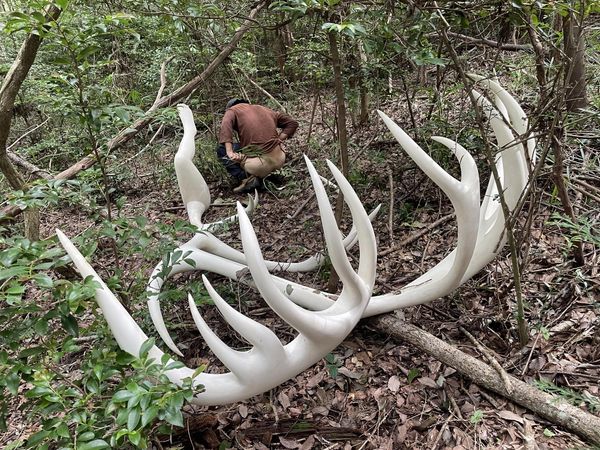



Finally, I have installed my artwork in Poop Land.
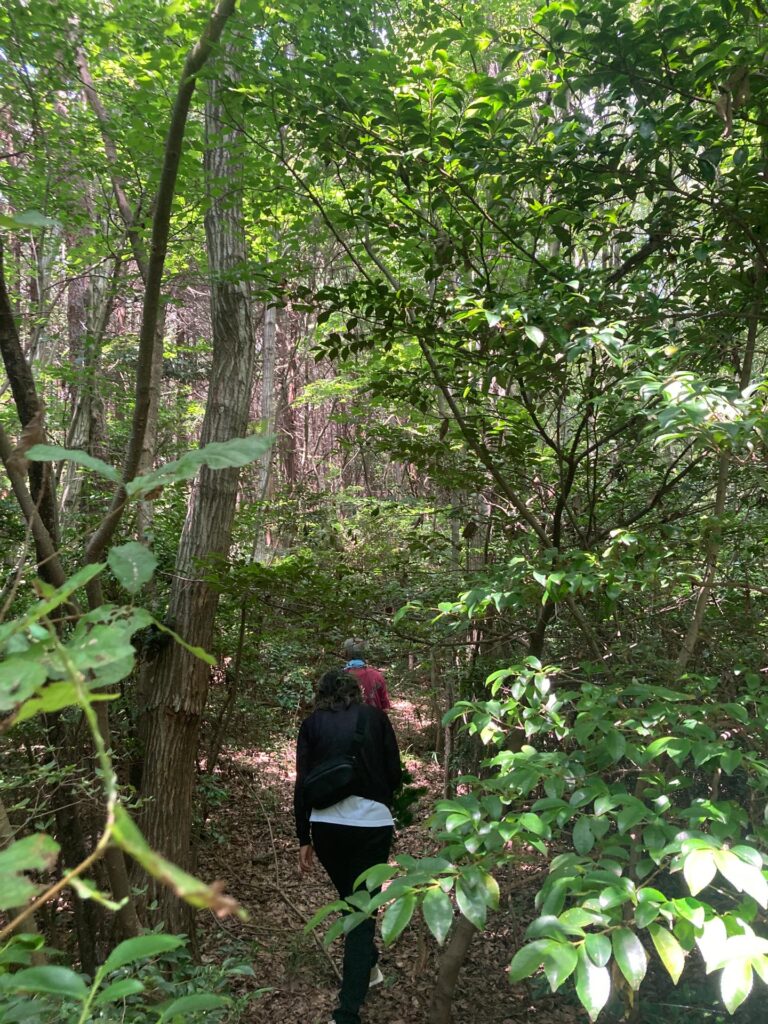
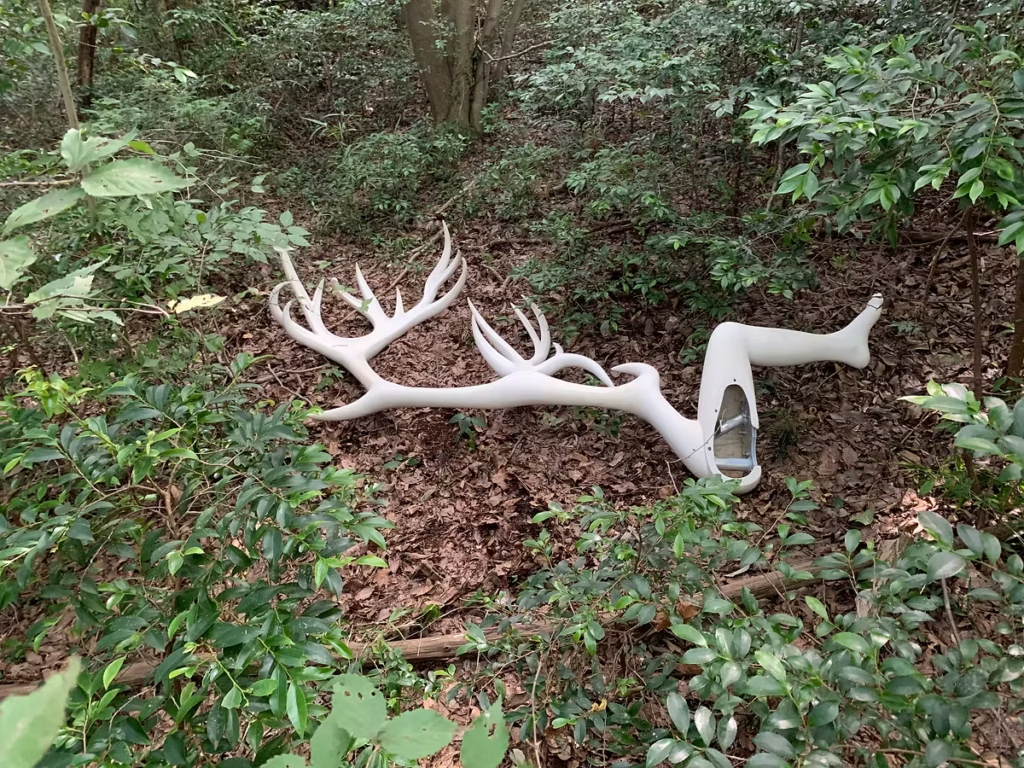
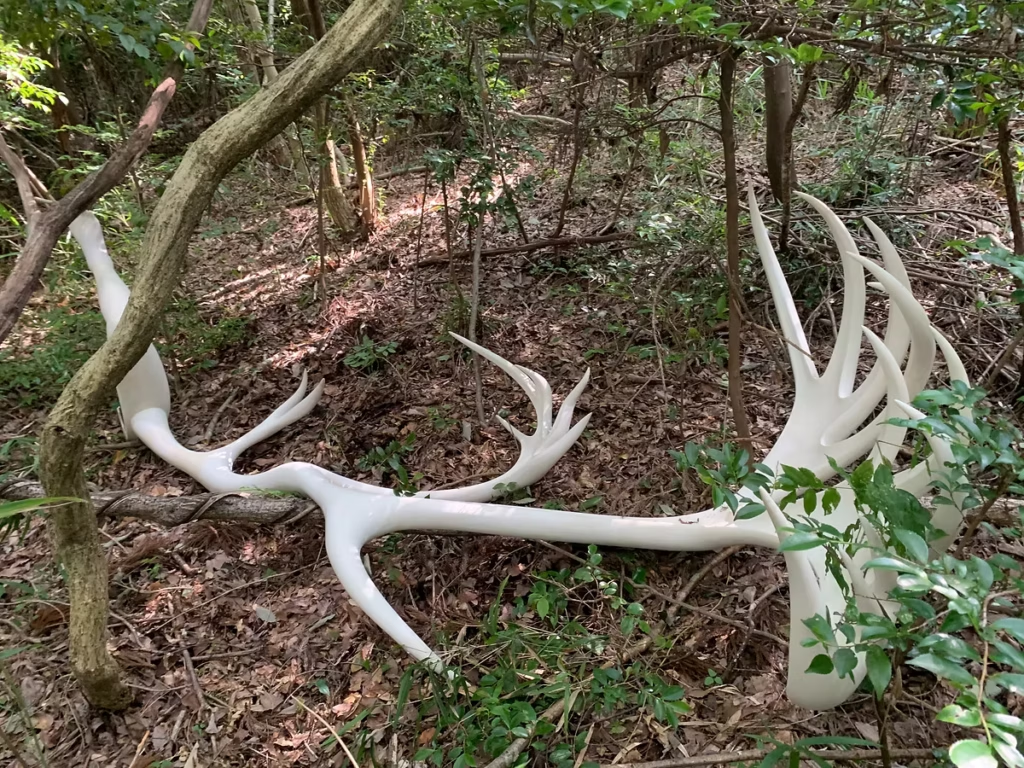
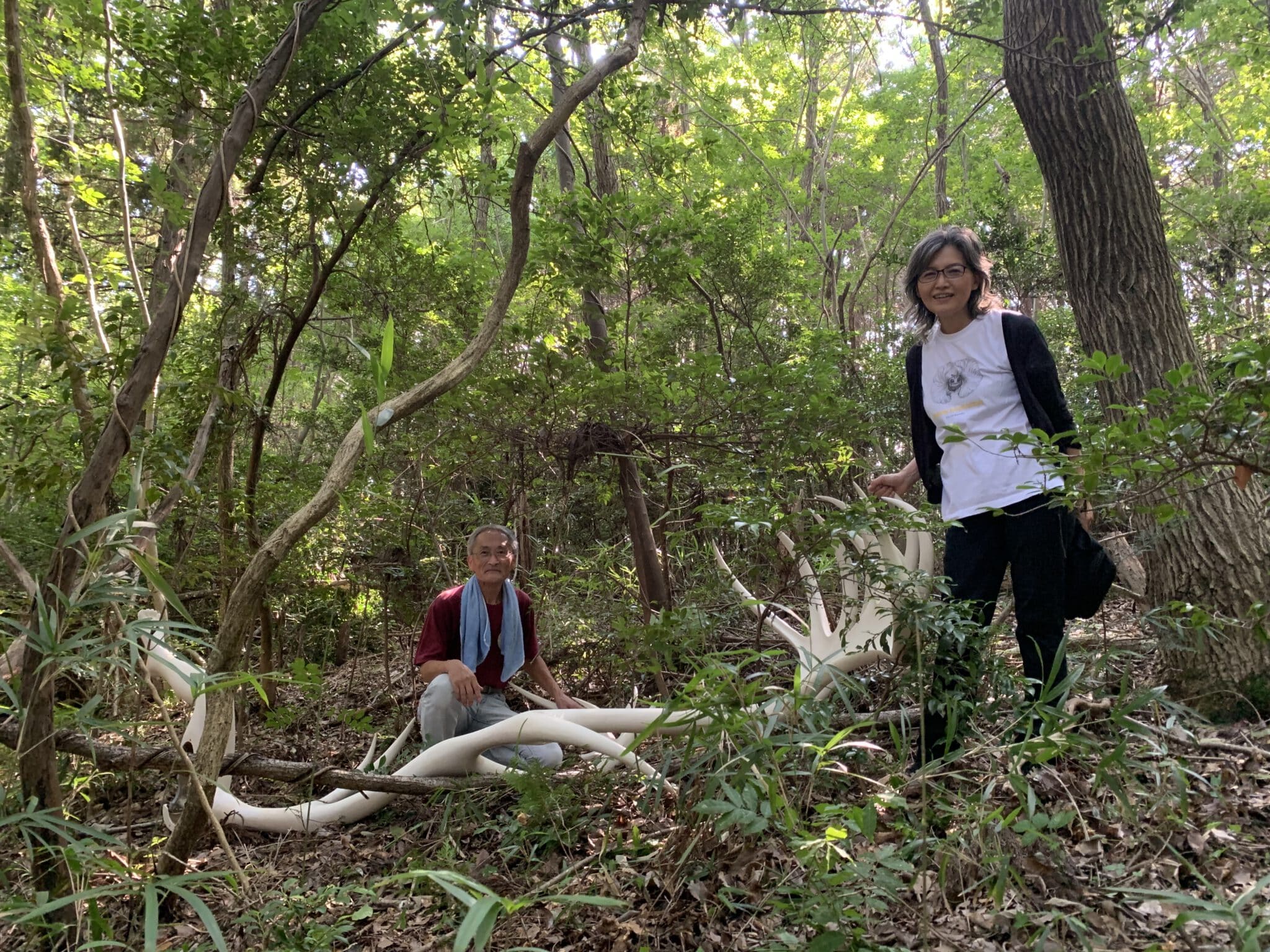
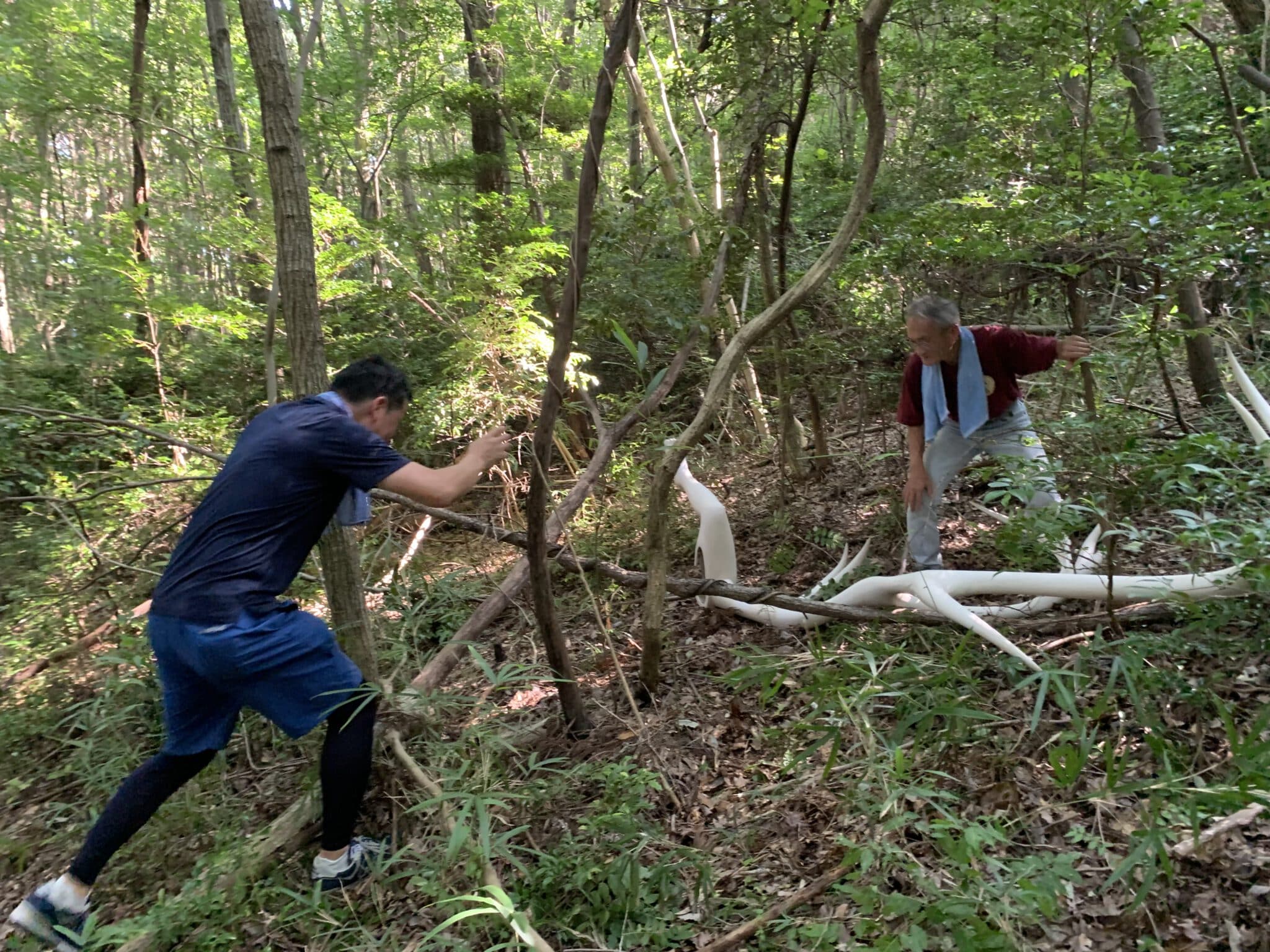
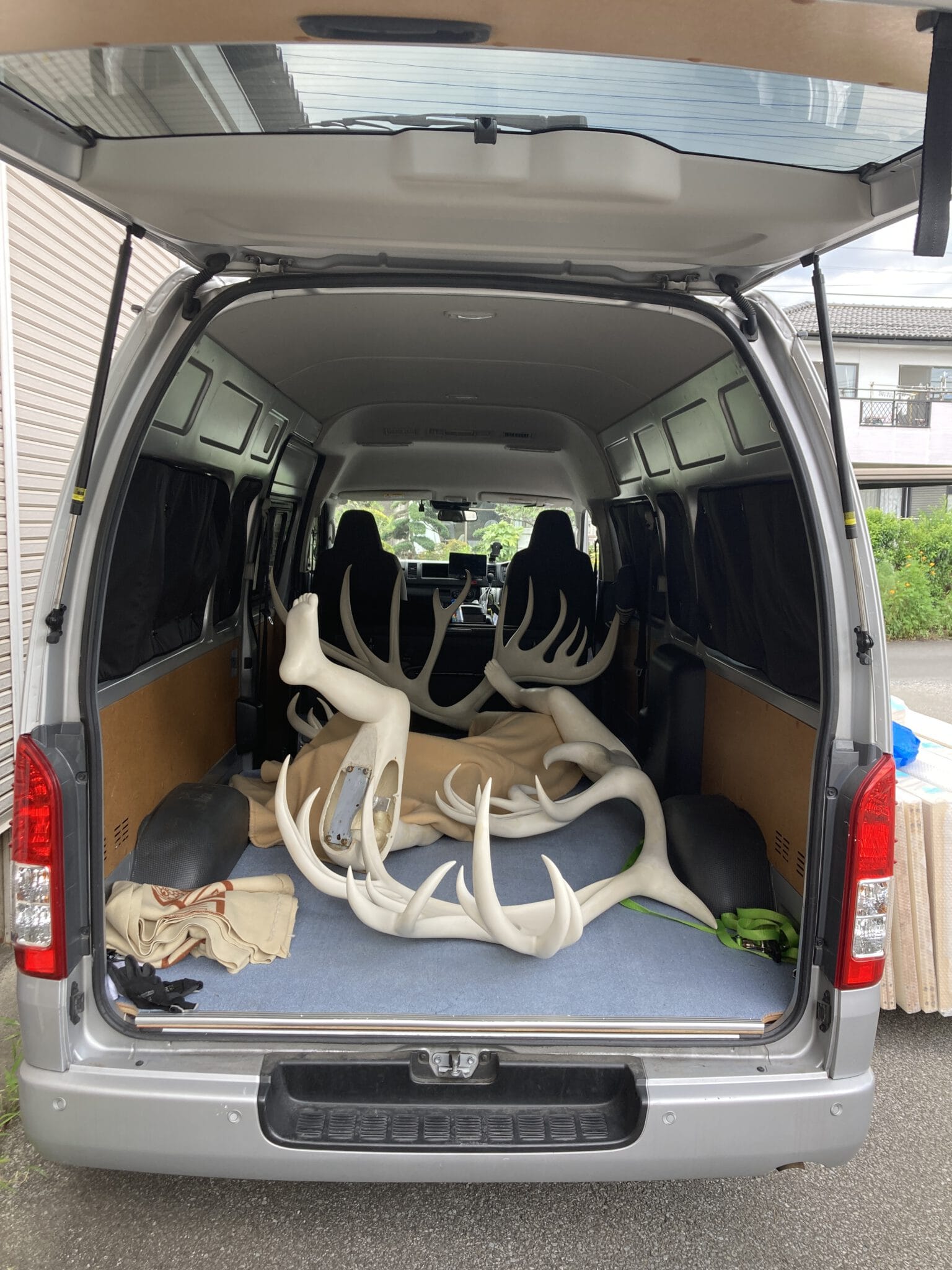
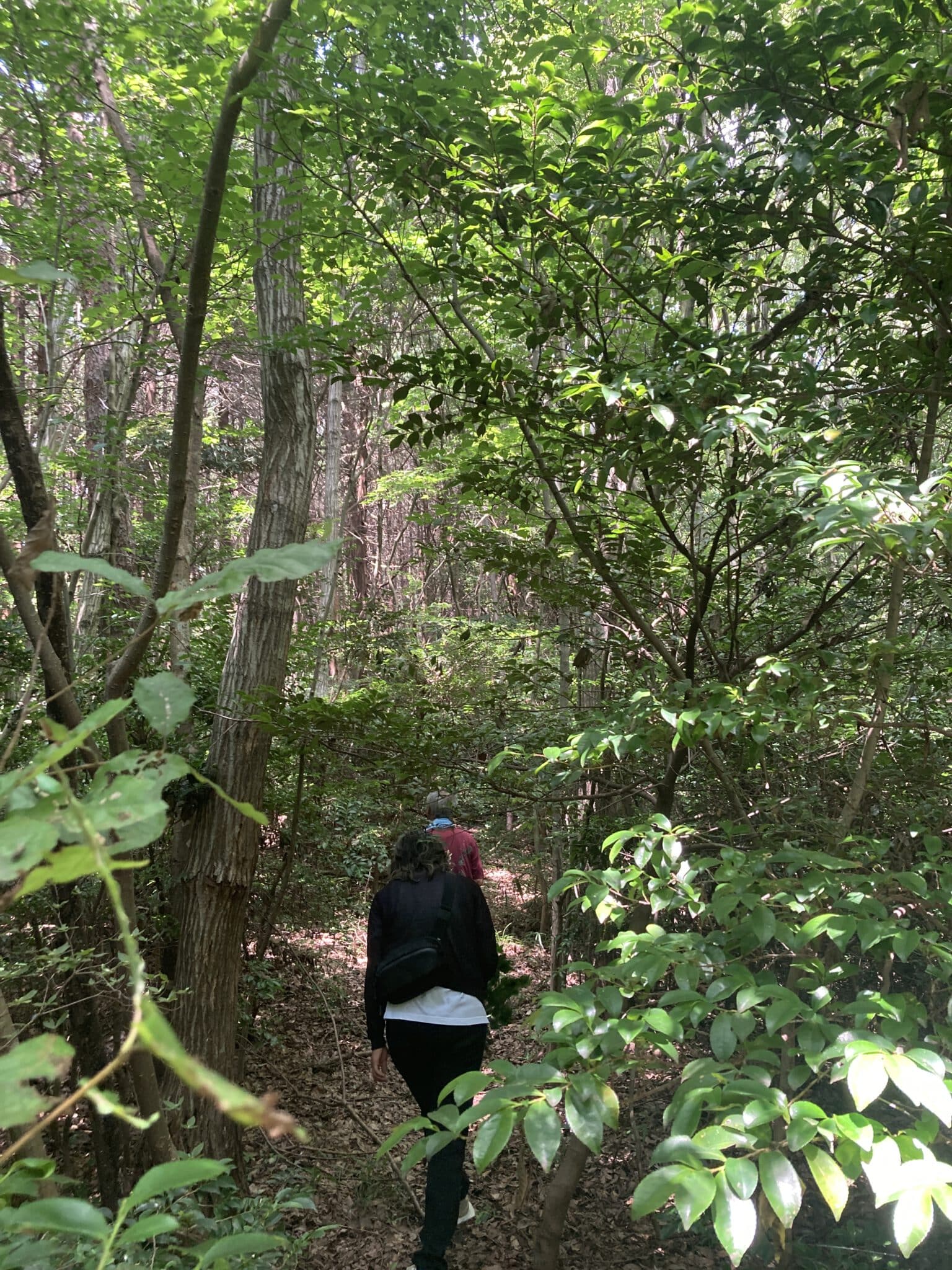
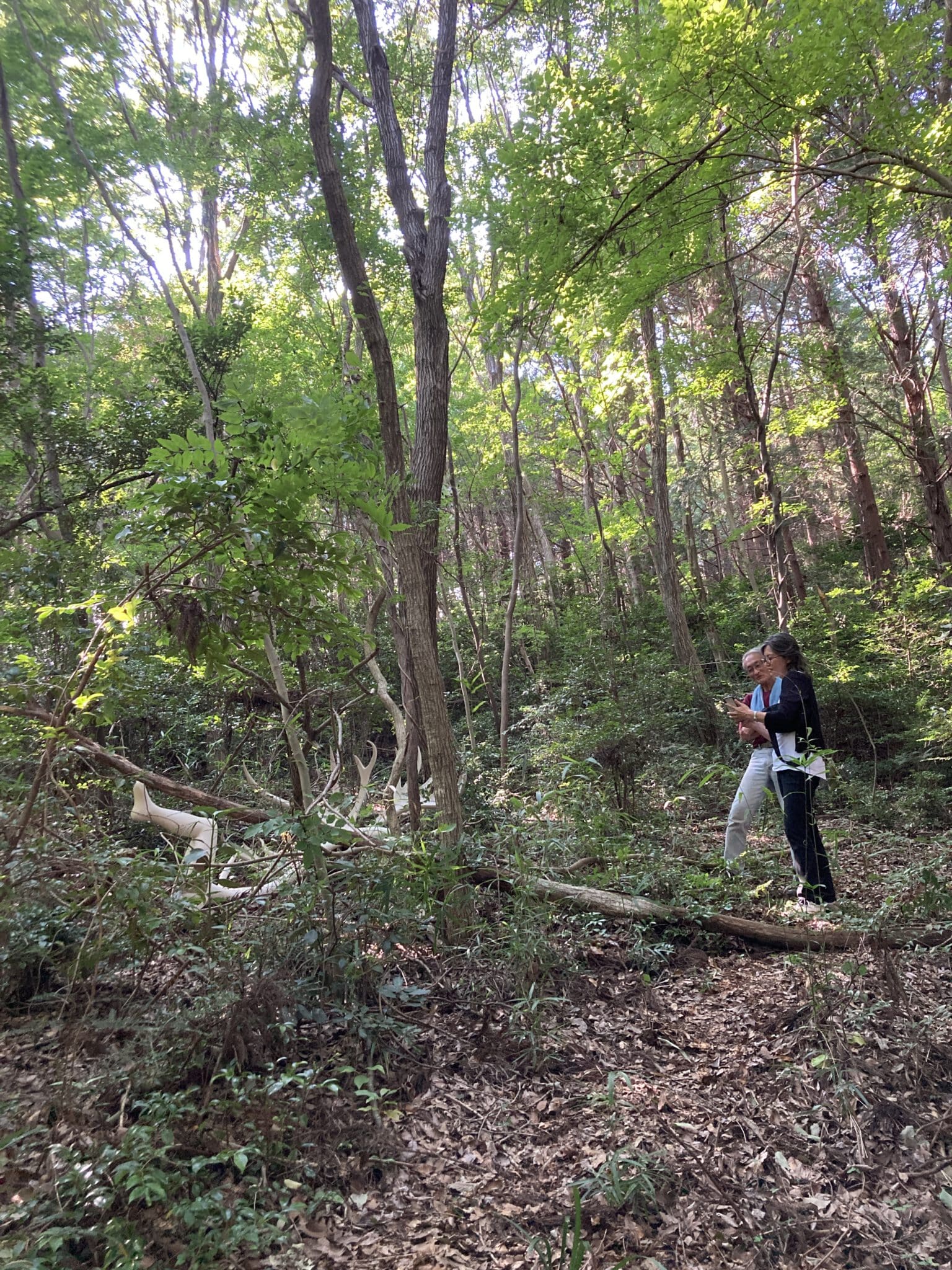
With the help of Sugita-san from GALLERY MoMo, who has been supporting the “Medicine Infrastructure Project,” we transported the piece in his large vehicle to Izawa-san’s “Unko no Mori” (Poop Forest) in Sakuragawa City, Ibaraki Prefecture. The three of us—Izawa-san, Sugita-san, and I—carried the large sculpture of a child’s legs with enormous horns and ventured into the forest.
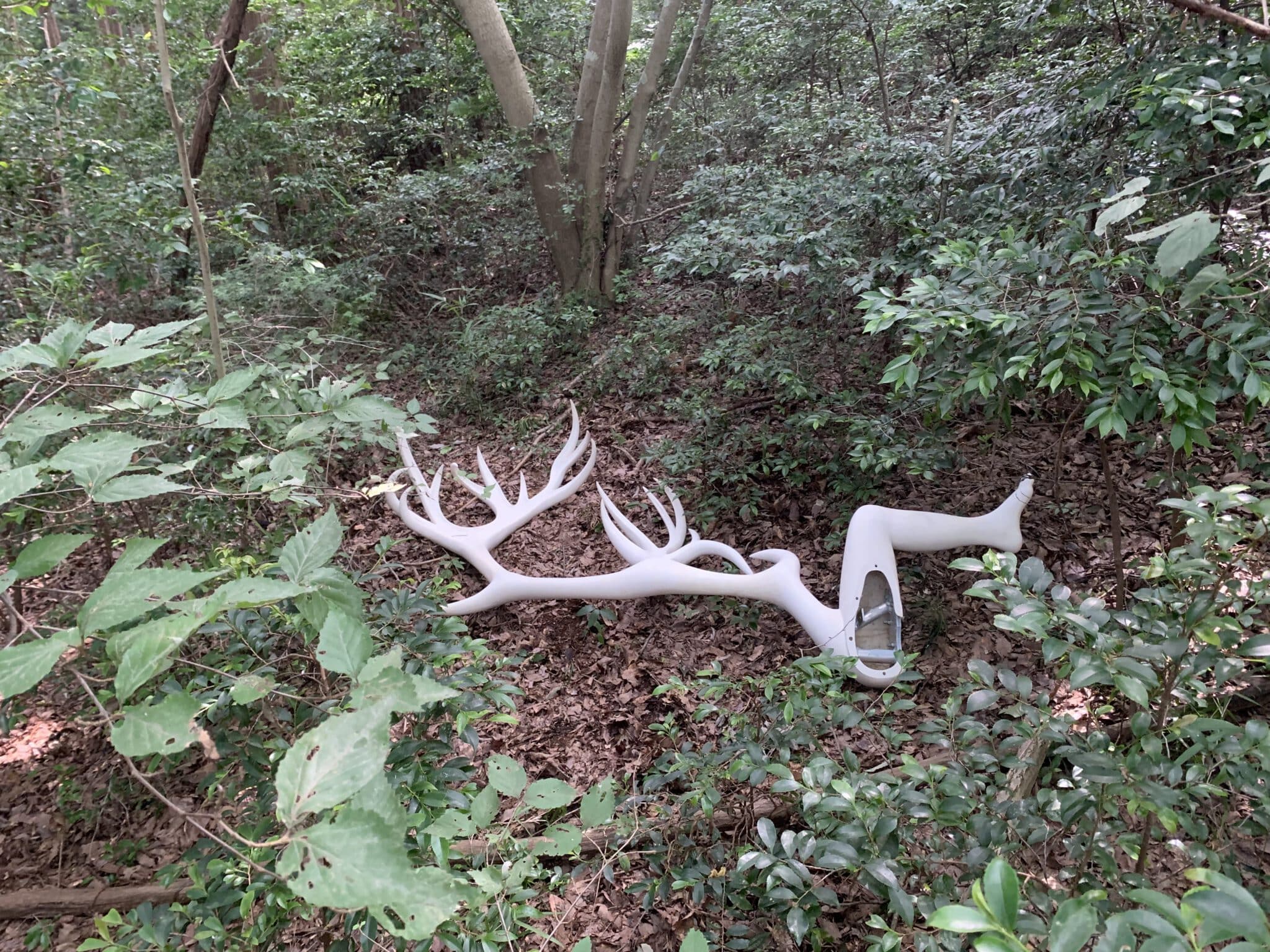
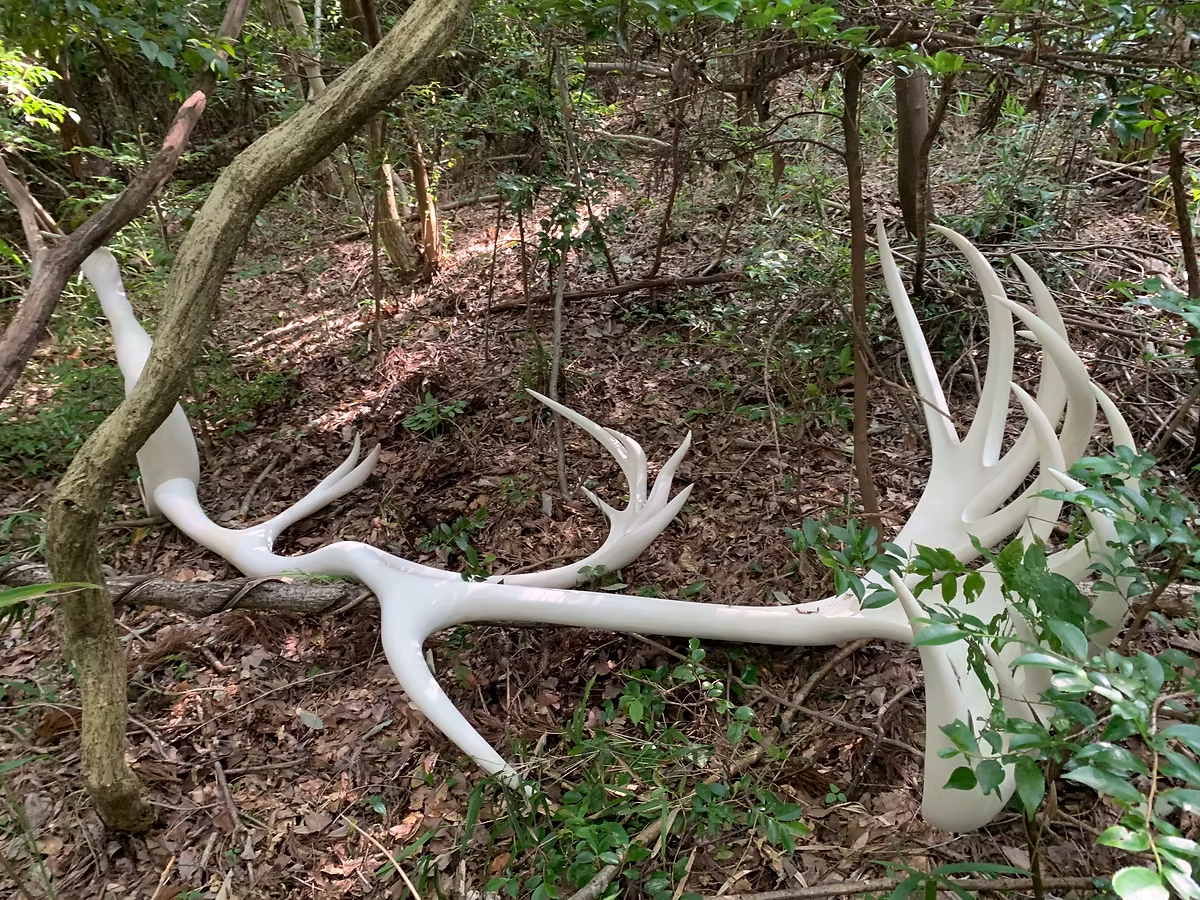
(Artwork dimensions: Left leg 2,640 × 1,250 × 520 mm, Right leg 2,640 × 1,760 × 1,750 mm)
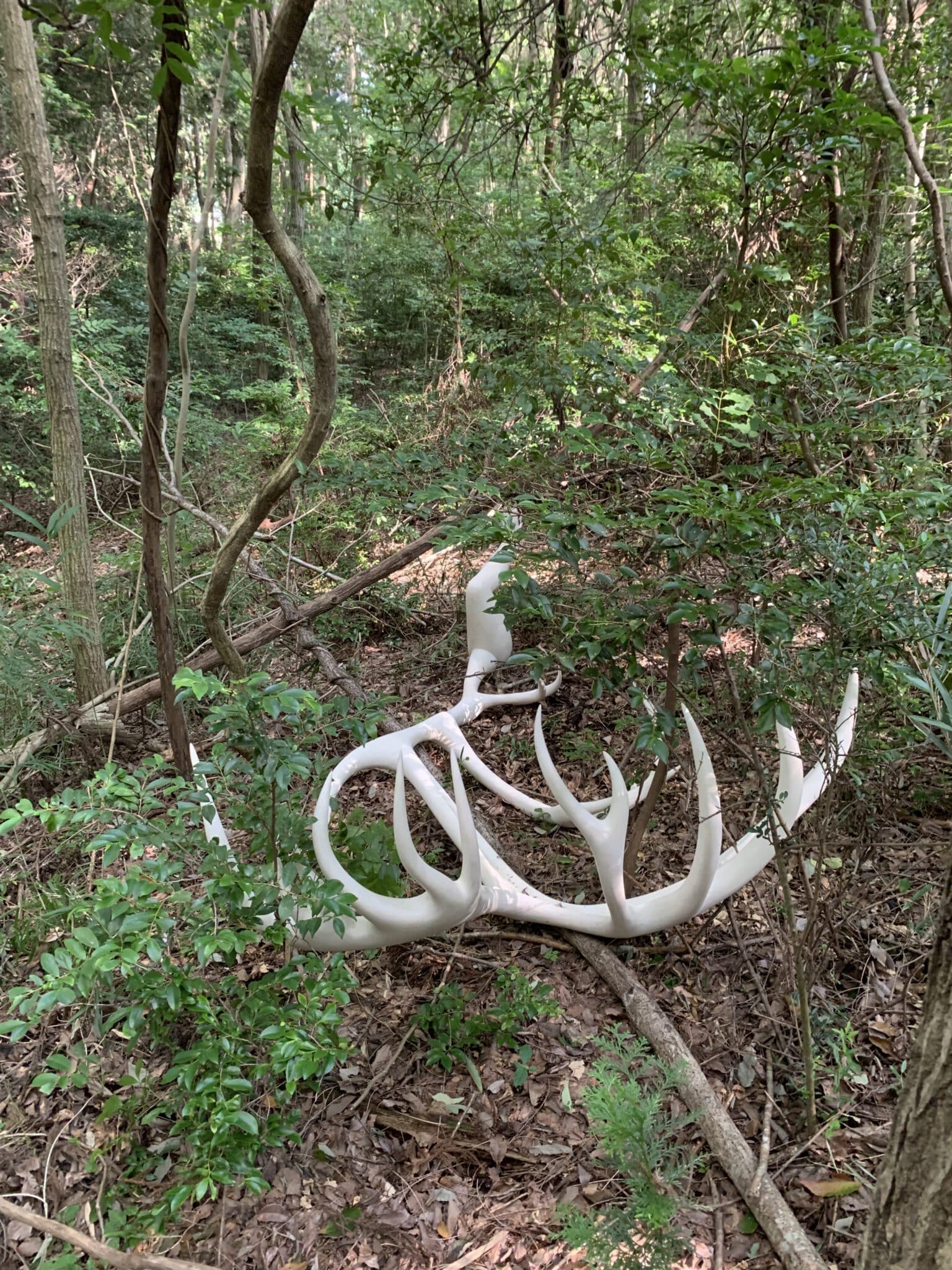
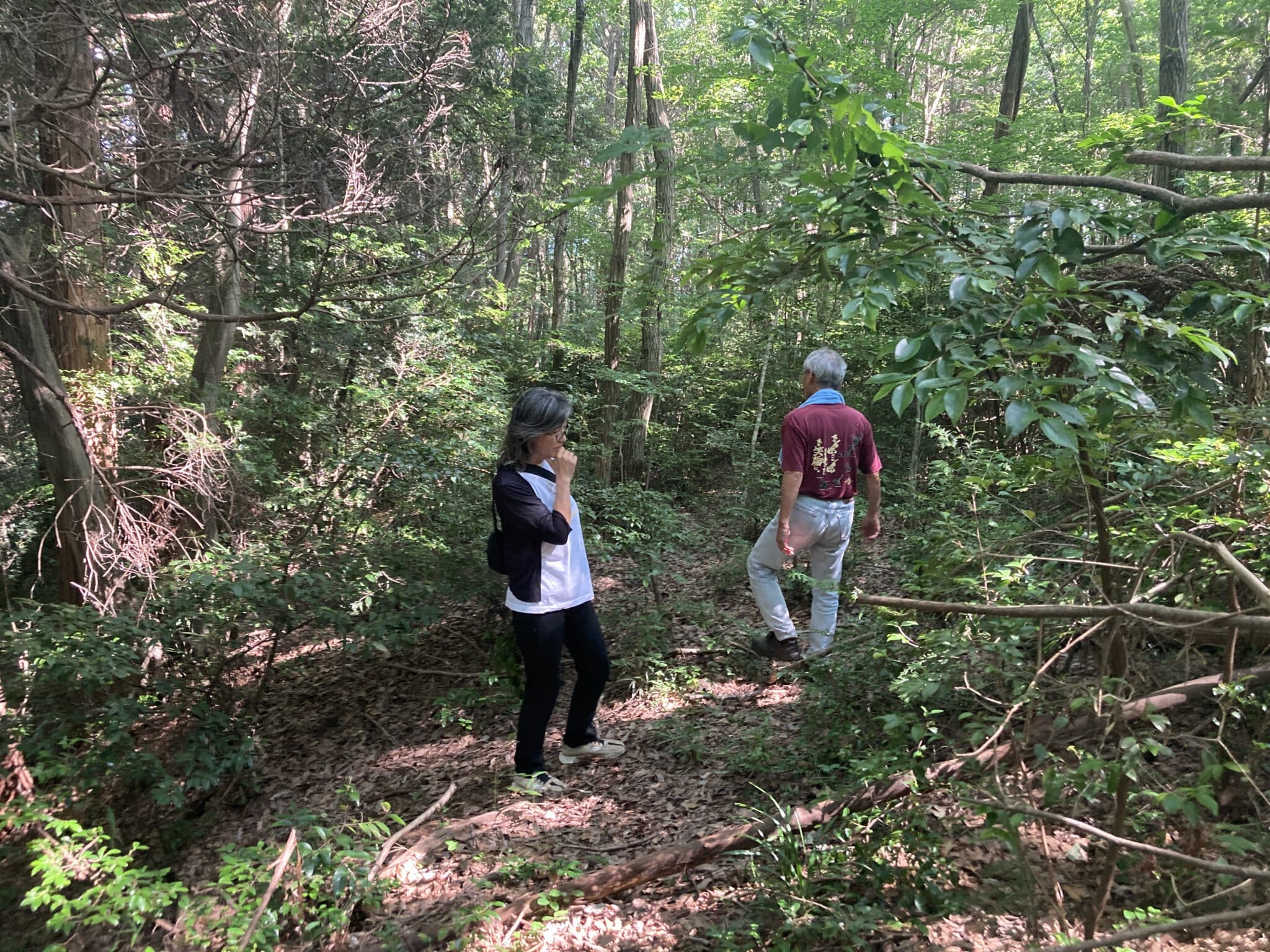
Upon returning to the forest after a year, I followed Izawa-san on a tour around the area. The first location I chose for installation was where Izawa-san himself intends to be buried one day, returning to the earth—his future grave. The decision was immediate. The place simply felt right.
Soft sunlight filtered through the trees, and a gentle breeze swept up from the forest floor. It was the perfect spot. As a future landmark for his resting place, we placed the right leg sculpture there. All three of us agreed—it was just right.
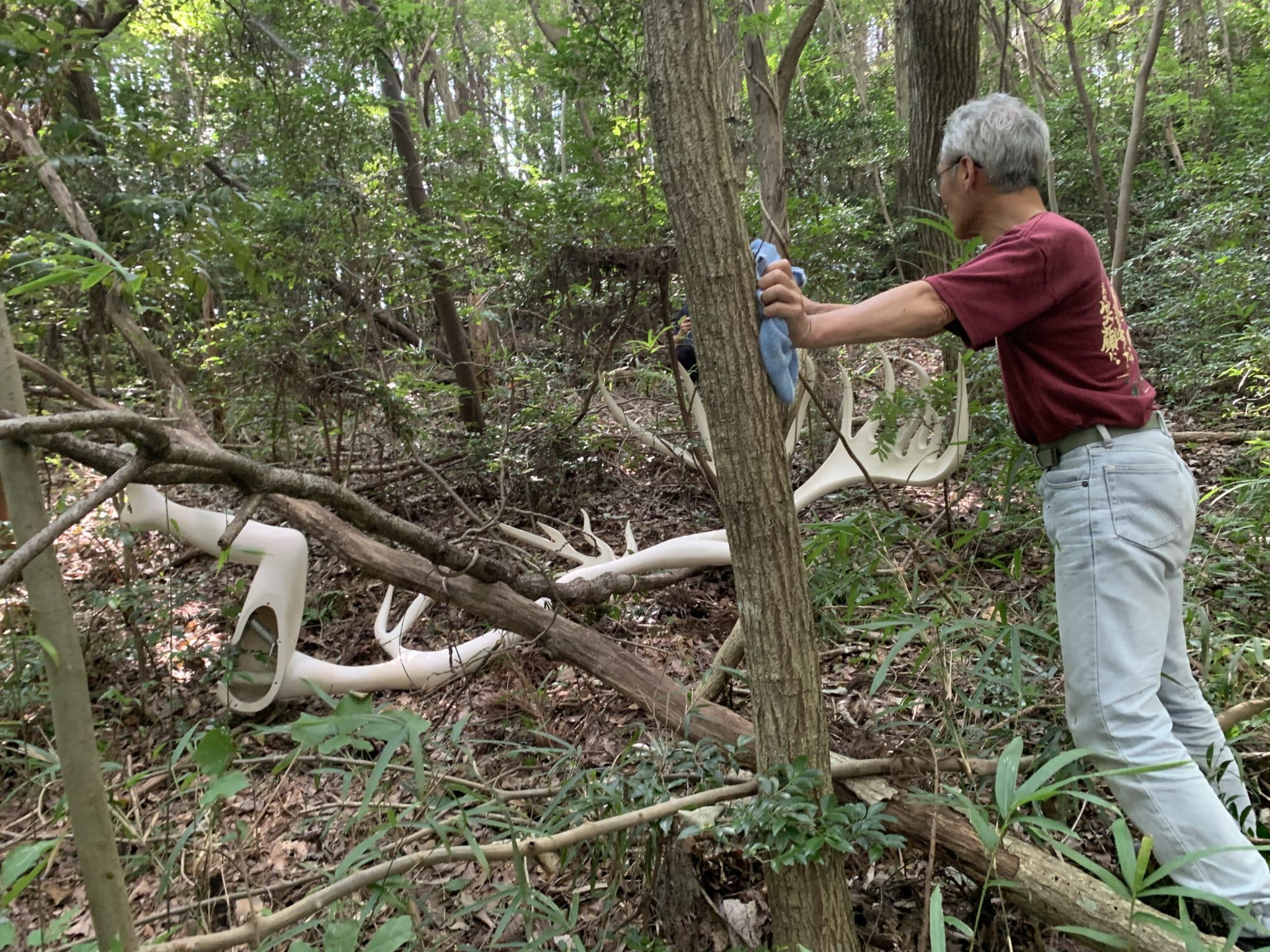
As for the left leg sculpture, we placed it near the boundary of the forest, where Poop Land’s broadleaf trees end, and the planted coniferous trees begin. Beyond this point lies an old, small cemetery that has existed for generations. Further still, a vast quarry stretches out—a site that has been carved away since Japan’s high economic growth period of the 1970s, consuming entire mountains for urban construction materials.
In contrast, Izawa-san’s broadleaf forest is a place where tiny lives are continuously, vibrantly reborn—sustained by our poop. This spot felt like a threshold, a liminal space. It revealed something beyond the concept of the Poop Land ecosystem—a raw and urgent survival strategy, where creatures use their own feces to create life. A new kind of cycle. The sheer ingenuity of it struck me with awe.
Incidentally, my artwork is made of FRP (fiber-reinforced plastic)—a synthetic material that became widely used during the high-growth era. You can even see the steel framework and bolts inside.
To create art, to make objects—these acts are inherently unnatural. Poop nourishes the forest, but artwork becomes waste. It offers no nutrients. And yet, humans continue to create.
As we talked about these things in the forest, we completed the installation with a refreshing sense of clarity.
What a tough and resilient forest this is. It’s rare to feel this kind of courage from an installation.